UPDATER SignUp

FREE email newsletter:
 news, tips, updates. 

ASK US

If you have any question, about any of our services or products, please let us know.

We respond to all inquiries promptly.


The Daily Strategist - Section Detail

More on the
Daily Strategist:
· Overview  · Example
·
PDF Download

The "categories" included in the report may vary from day-to-day. There will often be a few stocks or futures contracts mentioned in each category, but this is just for your information – if you are looking for additional ideas to trade, for example. Remember: all recommendations that we intend to include in our track record will have the box around them when they are made. As for what categories will be covered, they include the following:

Volatility Trading
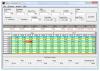
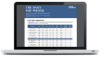
This list will be included almost every day. It will list a number of cheap options, and perhaps some especially expensive ones as well. The data included in this table (see example table above) are a) the percentile of current implied volatility: anything less than the 10th percentile is cheap, while anything above the 90th percentile is expensive, b) the probability of the underlying trading at one of the breakeven points at any time prior to expiration (this probability is determined by our proprietary Probability Calculator 2000 which we sell for $90), and c) a historic look at whether the underlying has been able to make moves of the required size in the past; there are two "historic" numbers: the first is the percent of the time that the underlying actually moved the required number of points, and the second is the percent of the time that the underlying made a percentage move of the size required.

Put-Call Ratio Signals
If there are significant new signals issued by the put-call ratio signals in indices, stocks, or futures, they will be summarized. The put-call ratios are contrary indicators. Essentially, when there is "too much" put buying indicating that the public is bearish the contrary trader should consider buying that market. Conversely, if there is "too much" call buying, we would look for a place to sell the stock short or buy puts. Our put-call signals are not generated by the ratio being at any particular level, but rather they are generated when the ratio rolls over and changes direction especially when that rollover occurs at an extreme on the chart. A rollover of the ratio from rising to falling is a buy signal (there has been "too much" put buying and it has exhausted itself). A rollover from a falling ratio to a rising one is a sell signal ("too much" call buying has been taking place).

Momentum Trading
We use a trend-following system for these speculative positions. In general, the system has two criteria for a "setup": 1) the ADX1 must be 30 or greater indicating that the underlying market is trending, and 2) it must have pulled back and touched its 10% exponential moving average line. One these two items have occurred, then the underlying can be bought if it trades at a price higher than the high of the bar than touched the moving average (2nd criterion). One bought, a mental closing stop is set at the low of that same bar the one that touched the moving average. All such stops are spelled out in the newsletter.

Others
From time to time, we may also recommend intermarket spreads, pairs trading or other strategic applications utilizing listed options. Again, these would be specific recommendations, with details including investment, risk, buy limits, and stops.

Pricing Information
Monthly Auto-Renew
(fax or email)
$350
 
Single Month
(fax or email)
$395
Quarterly
$900
 
Annual
$3000, save $1200
Seven Day Trial
Free

Finalist in the
"2003 Readers'
Choice Awards"
voted by readers of

Past Performance Is Not A Guarantee Of Future Results.

Order | Free ResourcesTrader's Products | Site Map
Trader's Hotline | Contact Us | Advertising | Support | LinksAbout Us

© 1997 - 2002, McMillan Analysis Corporation
Disclosure Document  Privacy Statement

site by SPIDERtel, Inc.